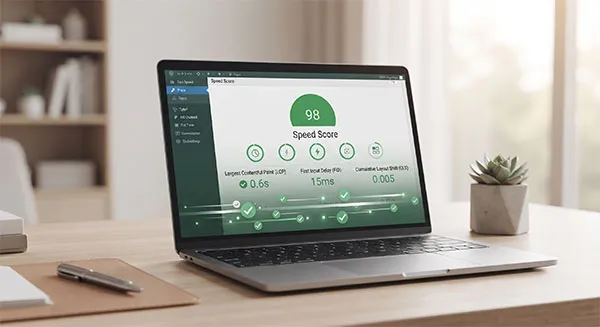
Website performance is directly tied to business revenue. When a page takes too long to load, users do not wait; they click away. Understanding how page speed affects user behavior and search engine visibility is critical for any business planning a website update.
The Cost of a Second
Independent research consistently shows that even a one-second delay in page load time can result in a significant drop in conversion rates. If your website takes four or five seconds to load, you are likely losing a portion of your incoming traffic before they even see what your business offers.Google's Core Web Vitals
Google uses a specific set of metrics called Core Web Vitals to measure the real-world user experience of your site’s speed, responsiveness, and visual stability. Sites that meet these performance thresholds receive a ranking advantage over slower competitors.Why Older Websites Slow Down
Over time, websites tend to accumulate virtual clutter. This includes:- Large, uncompressed images.
- Redundant or poorly written code from past updates.
- Too many active plugins or third-party tracking scripts.
- Cheap, shared hosting plans that cannot handle traffic spikes.
The SEO and Paid Advertising Connection
If you run paid advertising campaigns (such as Google Ads or Meta Ads) pointing to a slow website, you are wasting ad spend. Users who click your ads will abandon the site if it fails to load quickly, leading to high cost-per-click rates and low return on investment.A website redesign provides an opportunity to rebuild your digital presence on a clean, modern framework optimized for performance. By prioritizing speed, you improve user satisfaction, support your SEO efforts, and increase the likelihood of converting visitors into customers.
---
SEO Keywords: website speed impact, page load time business, improve website performance, Core Web Vitals, slow website conversion.