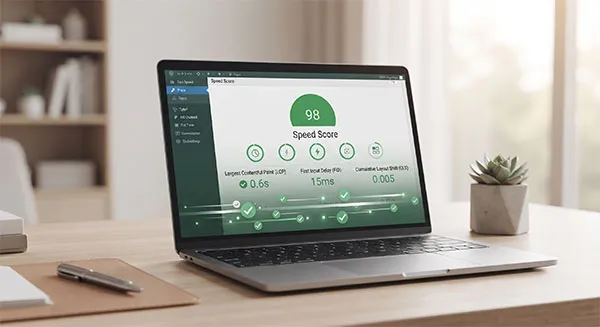
Website loading speed is no longer just a technical luxury—it is a critical business metric. According to recent search studies, a site that takes longer than 3 seconds to load loses over 50% of its mobile visitors.
Here are the key optimization steps we implement to deliver sub-second speeds for small businesses:
1. Ditching Legacy Content Management Software
Traditional platforms rely on heavy relational databases and load dozens of plugins, each adding their own render-blocking stylesheet and script tags. By building on clean, custom code structures, we eliminate database query latencies entirely.
2. Compressing Media Assets to Modern WebP Formats
Images make up the bulk of a web page's transfer size. We optimize all graphics to WebP compression formats, reducing typical file weights by up to 80% while retaining crisp, high-contrast details.
3. Minimizing Render-Blocking Scripts
We inline critical CSS rules, defer secondary scripts, and use native browser rendering pipelines so visitors see content almost instantly.